As we celebrate Women’s History Month, let’s look at the accomplishments of several remarkable women who were the musical rebels of their time.
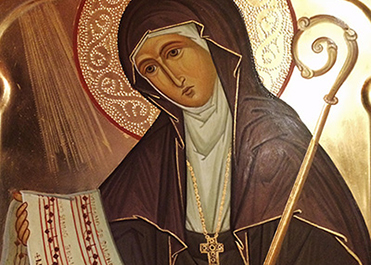
We begin with a Benedictine nun: Hildegard of Bingen is one of the first known composers of Western music. Born in 1098, she spent much of her life in a hilltop monastery, writing haunting melodies for the sisters. Also called a theologian, scientist and mystic, she was certainly unconventional. For example, when not in the monastery, she engaged in the very unusual (for women) practice of travelling the English countryside preaching. Fortunately, her work was preserved by the church and rediscovered some 800 years after her death. She was canonized in 2012.
Jumping ahead to the 17th century, we have Élisabeth Jacquet de la Guerre. A French Baroque-era singer, composer, and harpsichordist born in 1665, she was considered a musical prodigy. Her opera, “Céphale et Procris,” was the first opera composed by a woman in France and continues to be performed. Whereas many accomplished woman go unrecognized in their own time, Jacquet de la Guerre earned praise while she was still around to enjoy it. More importantly, she helped paved the way for future women composers, like Ethel Smyth.
Twentieth-century phenom Ethel Smyth was not only a composer but a suffragette. She was so passionate about women’s rights that she went to prison in 1912 for throwing a stone through a House of Parliament window during a protest. Legend has it that while she was imprisoned, a visitor found her using a toothbrush to conduct her fellow inmates. Smyth would write six operas during her life, including the highly acclaimed The Wreckers. In 2021, more than 60 years after her death, she was awarded a Grammy for The Prison.
For centuries, women have been answering the call of music ‒ and enriching our lives in the process.